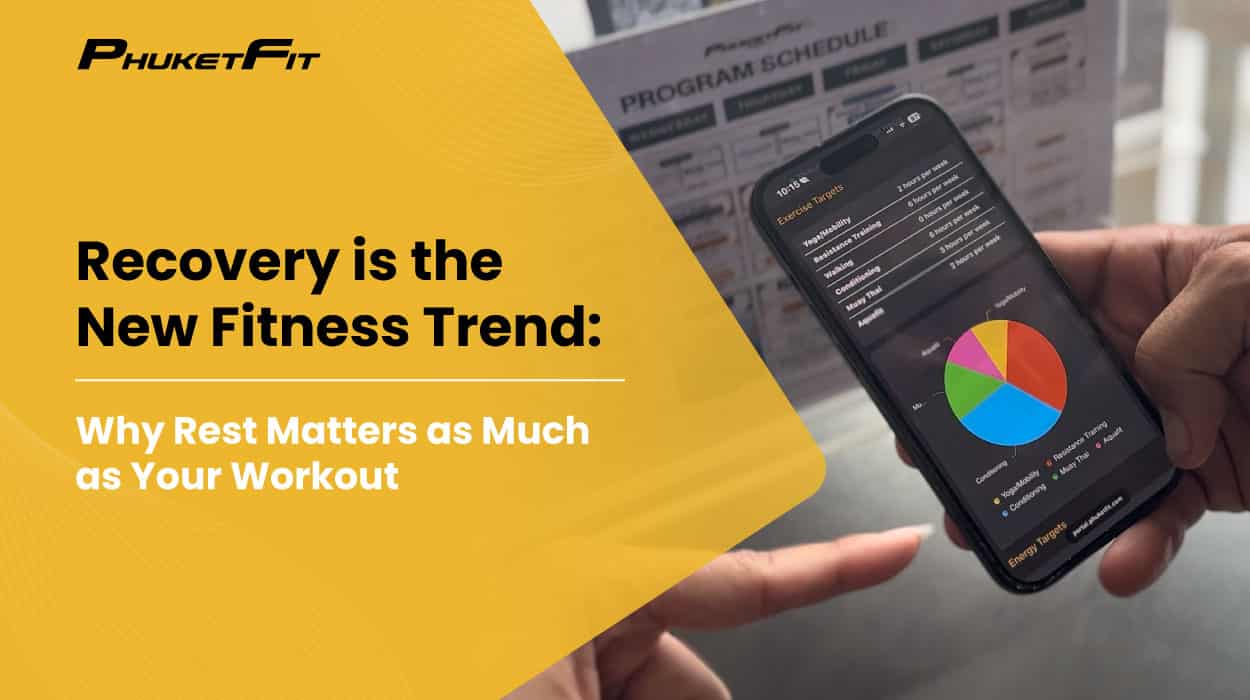
Why Recovery Matters as Much as Your Workout
Key Takeaways
- Recovery tracking can provide useful insights into sleep, training load, heart rate, and readiness.
- Recovery is important because it helps support consistent training and long-term fitness progress.
- Recovery involves more than rest—it includes sleep, nutrition, hydration, stress management, and appropriate training intensity.
- To improve recovery rate, focus first on consistent sleep, adequate nutrition, hydration, balanced training, and appropriate recovery activities.
- PhuketFit's Total Fitness Program combines structured exercise with nutrition, education, recovery facilities, and lifestyle support.
- Sustainable fitness is about finding the right balance between training, recovery, and consistency.
If you've been scrolling through social media lately, you've probably noticed a new kind of fitness update appearing alongside workout selfies and step counts: recovery scores. From screenshots of sleep data and HRV to daily readiness or recovery rates, people are increasingly sharing what their fitness trackers say about how well their bodies have recovered.
So, why has recovery tracking suddenly become so popular?
Fitness culture is shifting. Instead of celebrating only how hard or how often we train, people are becoming increasingly interested in what happens between workouts. A recovery score offers a simple, shareable way to show how the body is responding to exercise, sleep, stress, and daily activity. It has turned recovery into something people can track, understand, compare, and even share online.
But beyond the social media trend, recovery data can have a more meaningful purpose: helping people understand when to push, when to slow down, and how to build a more sustainable approach to fitness.
What Is a Recovery Score?
A recovery score is a metric designed to provide an indication of how prepared your body may be for physical or mental demands. Different wearable devices calculate recovery differently, and the exact metrics used vary by platform. Depending on the device, recovery-related insights may consider factors such as:
- Sleep quality and duration
- Resting heart rate
- Heart-rate variability (HRV)
- Recent physical activity
- Training load
- Stress
- Previous recovery patterns
The purpose isn't to give you a perfect measurement of your health. Instead, a recovery score can provide another piece of information to help you understand your current state.
It is also important to remember that recovery is individual. Two people can complete the same workout and respond differently. One person may feel ready for another intense session the following day, while another may benefit from lighter activity or additional rest. This is why recovery data is most useful when combined with how you actually feel.
Why Is Recovery Important After a Workout?
So, why is recovery important after a workout? Exercise places stress on the body. Training provides a stimulus that can challenge muscles, cardiovascular fitness, coordination, and energy systems.
Recovery gives the body an opportunity to adapt to that stimulus. Without sufficient recovery, repeatedly demanding high-intensity training can contribute to persistent fatigue and make it more difficult to maintain training quality and consistency. Good recovery can support:
Better training consistency
When you recover appropriately, you are more likely to be able to maintain your training routine over time.
Improved performance
Recovery allows you to approach future workouts with greater readiness rather than constantly carrying fatigue from previous sessions.
Energy management
Sleep, nutrition, hydration, and rest all contribute to having the energy required for exercise and everyday life.
Sustainable progress
Fitness is a long-term journey. Being able to train consistently over months and years is generally more useful than pushing yourself to exhaustion for a short period.
Reduced risk of excessive fatigue
Recovery alone cannot prevent every injury or training problem, but managing training load and allowing sufficient recovery can be an important part of a balanced fitness program.
The goal isn't to recover so that you can train harder every single day. The goal is to recover so you can train effectively and consistently.
How Does Your Recovery Score Affect Your Fitness Progress?
If you are using a wearable, you may wonder how your recovery score affects your fitness progress? The score itself does not determine whether you will become fitter. Instead, it can provide context that may help you make better training decisions. For example, if your recovery indicators suggest that your body is under significant strain, you might choose a lower-intensity session, mobility work, walking, or additional recovery rather than another demanding workout.
On a day when you feel well recovered, you may be better prepared for a more challenging training session. Over time, this can help create a better balance between training and recovery. It is also useful to look at trends rather than becoming overly focused on one day's score.
A single low recovery score from a third-party device does not necessarily mean something is wrong. Likewise, a high score does not mean you should ignore fatigue or other symptoms. It is important to note that while we discuss recovery tracking as a useful decision-making tool, PhuketFit does not provide a recovery score as part of its programming.
Recovery Is More Than Just Rest
Recovery is not just about taking a day off. It also depends on the everyday habits that help your body recharge. Quality sleep supports physical and mental wellbeing, while balanced nutrition provides the energy and nutrients needed for training and repair. Staying hydrated is especially important around exercise and in hot environments. Active recovery, such as walking, gentle stretching, mobility work, or easy swimming, can also help you stay moving without adding significant training stress.
Besides, stress management matters because work, travel, poor sleep, and daily responsibilities can all affect how recovered you feel. Together, these habits create a more holistic approach to fitness and long-term wellbeing.
How to Improve Your Recovery Rate
If you are wondering how to improve your recovery rate, start with the basics before looking for complicated solutions.
1. Prioritize consistent sleep
Aim for a regular sleep schedule and create an environment that supports quality rest.
2. Fuel your body properly
Avoid treating food simply as a way to reduce calories. Your nutrition should provide the energy and nutrients needed to support your activity and recovery.
3. Balance training intensity
Not every workout needs to be high intensity. Alternating demanding sessions with appropriate lower-intensity or recovery-focused activities can help create a more sustainable training routine.
4. Stay hydrated
Pay attention to your fluid intake, particularly when training in hot or humid conditions.
5. Include recovery activities
Mobility work, swimming, stretching, steam-room sessions, and other appropriate recovery activities can complement a training program.
6. Monitor your body's response
Use recovery data alongside subjective signals such as energy, soreness, mood, sleep quality, and performance.
7. Don't chase the perfect score
Recovery metrics are useful indicators, but they are not a substitute for listening to your body or professional advice. The objective is not to achieve the highest possible recovery score every day.
It is to create the conditions that allow you to train, recover, adapt, and continue.
How PhuketFit Supports a Recovery-Focused Approach

PhuketFit takes a broader approach to fitness by combining exercise with nutrition, recovery, education, and lifestyle development. Our Total Fitness Program is designed around overall fitness, strength, conditioning, and long-term health rather than focusing solely on the number on the scale. The program includes strength and conditioning, flexibility and mobility, Muay Thai, and other activities.
Importantly, recovery is built into the program rather than treated as an afterthought. The Total Fitness Program incorporates structured recovery through scheduled rest days, Performance Prep sessions, mobility and stretching, and AquaFit. Guests also have access to a steam room, onsite 15-metre swimming pool, ice baths, and various lower-intensity recovery options, alongside nearby beaches and organized excursions. This creates a balanced environment for training and regeneration.
Nutrition supports recovery
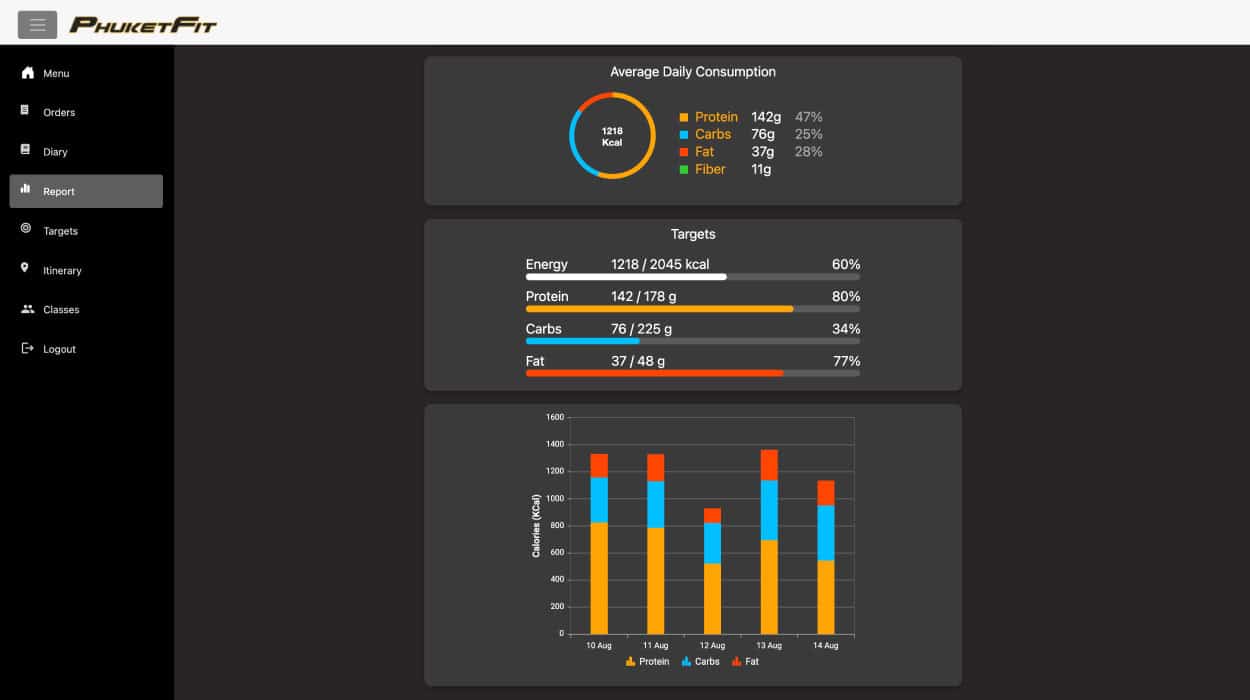
PhuketFit's approach also recognizes that training cannot be separated from nutrition. The Total Fitness Program includes calorie- and portion-controlled meals, macronutrient recommendations and tracking, three daily meals, healthy snacks, protein shakes, and fruit shakes or juices.
The wider PhuketFit philosophy emphasizes wholesome, balanced meals and education around macronutrients and portion control rather than fad diets.
Education helps recovery become a long-term habit
Recovery is also about understanding how your body responds to training. PhuketFit incorporates education into its programs through workshops covering nutrition, exercise, health and fitness apps, and Q&A sessions. The Total Fitness Program also includes weekly progress scans for all guests to monitor body-composition changes over time.
This education-first approach supports the idea that guests should leave with more than short-term fitness results. They should also understand how to continue making healthier decisions when they return home.
Building a Sustainable Approach to Fitness
Ultimately, recovery is not the opposite of fitness. Recovery is part of fitness. Whether you train at home, join a gym, or participate in a structured health and fitness retreat, the principles remain similar.
Train with purpose.
Fuel your body.
Prioritize sleep.
Manage stress.
Allow appropriate recovery.
And pay attention to how your body responds.
At PhuketFit, the emphasis is on creating a comprehensive fitness journey that brings these elements together. The Total Fitness Program combines training, nutrition, recovery, education, and exploration, with the aim of helping guests build habits they can maintain beyond their stay.
Ready to take the next step toward a fitter, healthier you? Contact PhuketFit today to learn more about our Total Fitness Program.
Frequently Asked Questions